
BIOGRAPHY
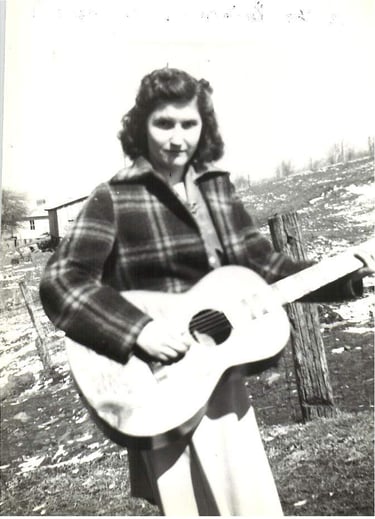
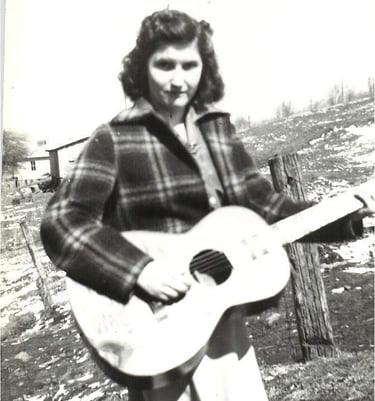
(View her entire biography on the Bluegrass Hall of Fame Website: LINK HERE)
EARLY LIFE
As the 8th of 11 siblings from the coal mining town of Montcalm, West Virginia, Hazel Dickens learned to appreciate mountain music from a young age. Her father played banjo as a primitive baptist preacher, and her siblings all grew up listening to the Grand Ole Opry on radio. Her upbringing helped her develop an appreciation for words and music, with her home and faith having a profound influence on how she used music to tell her stories (IBMA, 2017).
MOVE TO BALTIMORE
Like many families struggling from the boom and bust of the coal economy, much of Hazel's family had moved to other cities in search of better opportunities. Hazel's family was no different, and by the 1950s many of her siblings had already moved to Baltimore. In 1954, Hazel hopped on a greyhound bus to permanently relocate (IBMA, 2017).
Initially, she first worked with her sister Velvie as can quality inspector on the assembly line of Continental Can Factory. While she had already known about the importance of labor protections growing up in southern WV, at this job she experienced the firsthand benefits of having union representation to prevent retaliation over workplace grievances (Appalshop, 2001). This was one of the first can factories in Baltimore to be organized by the United Steelworkers. According to Arnold "Buddy" Dickens, at one point Hazel helped mobilize workers to refuse a Saturday shift while they were undergoing contract negotiations.
Eventually however, Hazel began to realize that the demanding schedule of factory work was incompatible with her desire to speak her truth through music, and a few years later she left to work part time as a waitress and start her music career.
Born to a Coal Mining family in Montcalm WV on June 1st, 1925, Hazel Dickens was one of the pioneering women in bluegrass music and a powerful voice for the struggles of working people, especially coal miners in Appalachia.
In the Baltimore music scene of the 50s, Hazel was almost always the only female performer: “There were few choices open to women in those days, and working conditions left a lot to be desired, when and if you did work. If I was working, I was generally the only female in the band. So I got hit on all the time, and they got mad when I turned them down. That made working conditions even more tense.” She frequently experienced wage discrimination for being a woman, including one instance of a club owner pocketing her tips (Emily Hilliard, 2021).
As Hazel recounts in her biography, the folklorist Mike Seeger had been a conscientious objector during the Korean War and served at Mt. Wilson Tuberculosis Hospital where Hazel's brother Robert Dickens was a patient. It had become known that Mike was a musician and his main study at the time was his love for Appalachian and Folk Music. Eventually, Robert introduced Mike to his other brothers Arnold Dickens Sr. (The Father of Arnold "Buddy" Dickens), and began playing music at each other's homes, where Mike Seeger met Hazel's parents, Hilary & Sarah (Simpkins) Dickens.
Mike and Arnold eventually started jamming together, and as Arnold "Buddy" Dickens remembers, she was initially cautious of her family's new found friend and once picked up a radio and told them how the music should sound. He recalled: "Mike and Dad chuckled and continued pickin’"
Eventually, as the friendship continued to grow, Mike introduced Hazel to another colleague of his, Hazel's future singing partner Alice Gerrard, who had just begun exploring mountain music through the Harry Smith Anthology. they made their first public debut in 1962 at the Old Fiddlers Convention in Galax, VA. Their first record deal was set in motion two years later with Folkway Records, and became the first bluegrass band fronted by two women (IBMA, 2017).
Alice Gerrard is still performing and touring at 90! She also has her own book that just came to print entitled “Custom Made Woman.”
A MUSIC CAREER IS BORN
A VOICE FOR JUSTICE
In 1963, Hazel's brother Thurman Dickens, died of Black Lung. Hazel spent the last three weeks of her oldest brothers life watching a horrible disease snatch the breath and strength from his body. Though a hard worker, he was born, lived and died poor without means to pay for his own burial. Hazel also had two brother in-laws that passed, and witnessed the disease steal the life from their bodies, and how her sisters and their children suffered from the loss of a husband and father.
Most of all she realized people were dying from digging coal and her home of West Virginia was suffering. Wives lost Husbands, Children lost Fathers and as her song "Black Lung" says, they were living on starvation's plan.
While many music catalogues, biographies, and historians place her songs into various categories of personal stories, womens songs, labor music, and religious hymns, Hazel viewed all these issues as interconnected. She used her voice to speak out against oppression it all forms, be it workers, women, and herself. Hazel was always seeking to uplift people struggling in all forms of work, paid or not. (Emily Hilliard 2021)
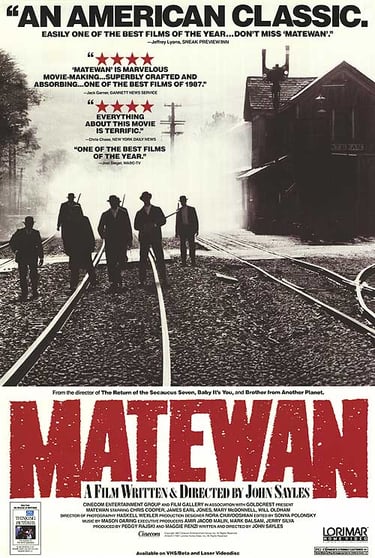
In addition to her famous song Black Lung, she also wrote other songs about the plight of coal miners during her support for the Miners for Democracy movement, with many such songs contributing to the soundtrack of Harlan County USA such as "The Yablonski Murder", "Mannington Mine Disaster," "They'll Never Keep us Down", as well as contributions to John Sayles' 1987 movie Matewan such as "Fire in the Hole." (IBMA, 2017).
In addition to her coal mining songs, she also wrote about the struggles of child migrant workers such as "Little Lenaldo." Many of her songs about womens rights highlighted the struggles of being a working woman, such as "Working Girl Blues" which she wrote on the back of an inventory card on a long shift at a D.C. department store. Her song "Old Calloused Hands" was written for her sister, who worked at factories and as a housekeeper for coal bosses before becoming a housewife for an abusive husband and nine children (Emily Hilliard, 2021).
THE FIGHT FOR BLAIR MOUNTAIN AND PRESERVING HAZEL'S VISION
Hazel Dickens passed away in April of 2011 and is now buried at Roselawn Memorial Gardens in Princeton, West Virginia.
In December of 2009, after pressure from Massey energy and Arch Coal to begin strip-mining the area, the National Register of Historic Places removed Blair Mountain from its register. As the site where over 10,000 union miners marched in 1921 to organize the non-union mines of southern West Virginia, it was the nation's largest armed insurrection since the civil war and a pivotal point of US history in the struggle for workplace protections and the end to the company mine-guard and scrip payment system.
In the Spring of 2011, the United Mineworkers of America (UMWA) joined various environmental and community groups to recreate the historic march on Blair Mountain and fight for the restoration of Blair Mountain on the National Register of Historic Places. A music festival titled "Music Saves Mountains" was planned at the State Capital Culture Center to raise money and awareness for the cause. Hazel Dickens had intended to host the festival, but passed away just two months before the concert took place. It was hosted by Wheeling native Tim O'Brien in her honor (Charleston Gazette, 2011).
As Fly Away Home Festival, we continue to honor Hazel's legacy by uplifting her voice for working and oppressed people from Appalachia and beyond, and we are proud to donate 100% of all proceeds from the yearly festival towards coal miners continuing to suffer from Black Lung disease today.
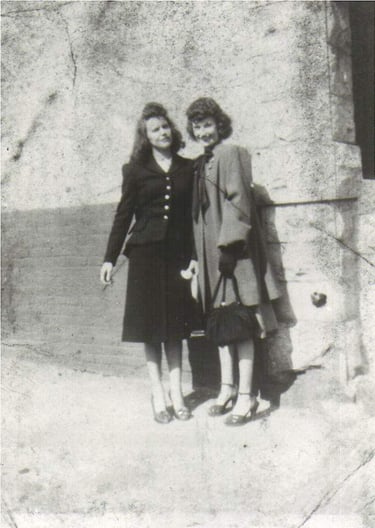
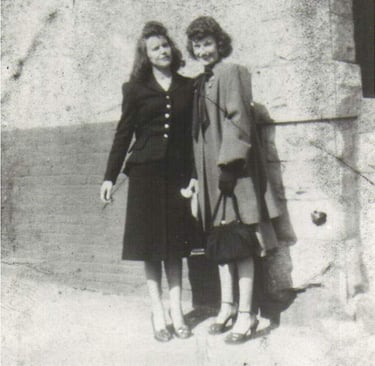
Velvie and Hazel Dickens
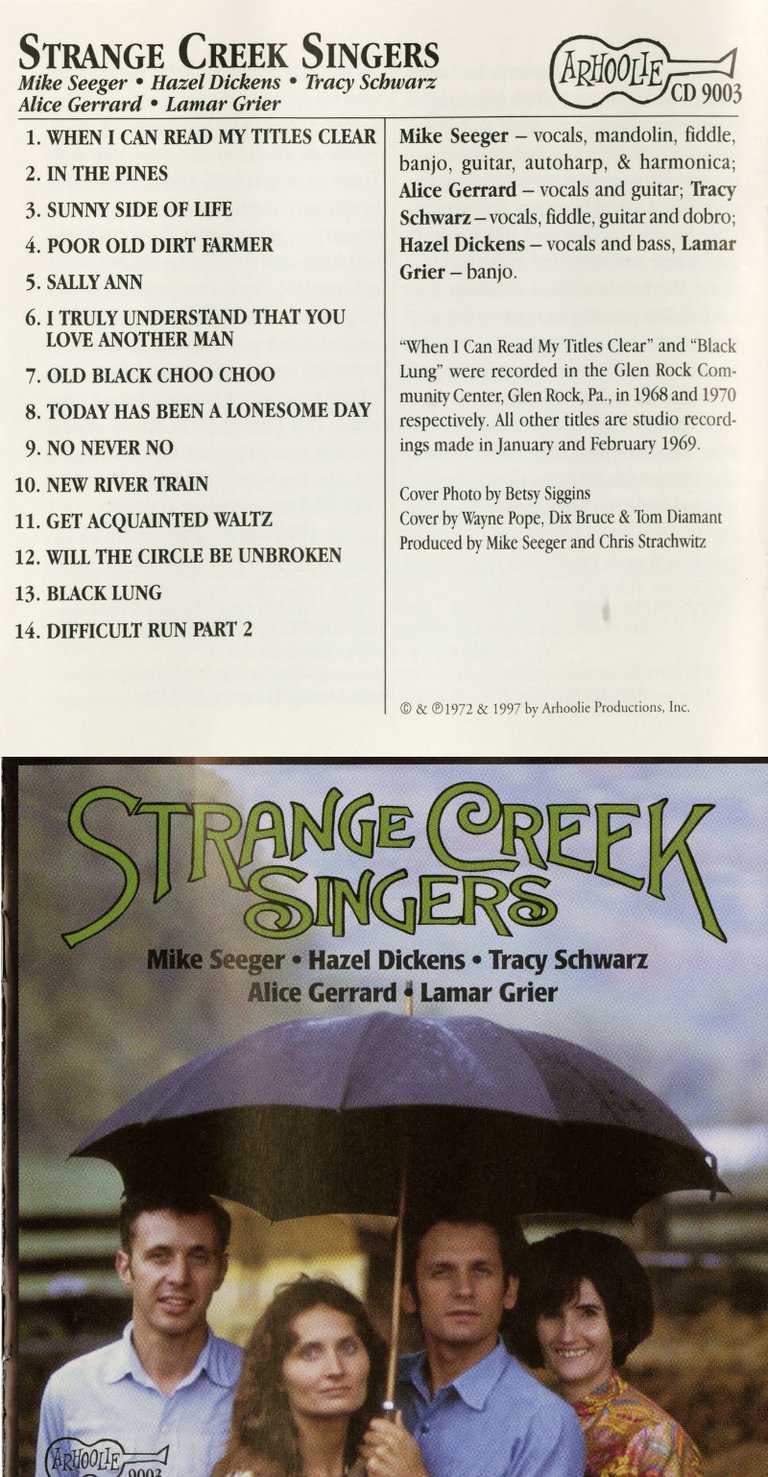
Strange Creek Singers (Copyright 1997 by Arhhoolie Productions Inc.)
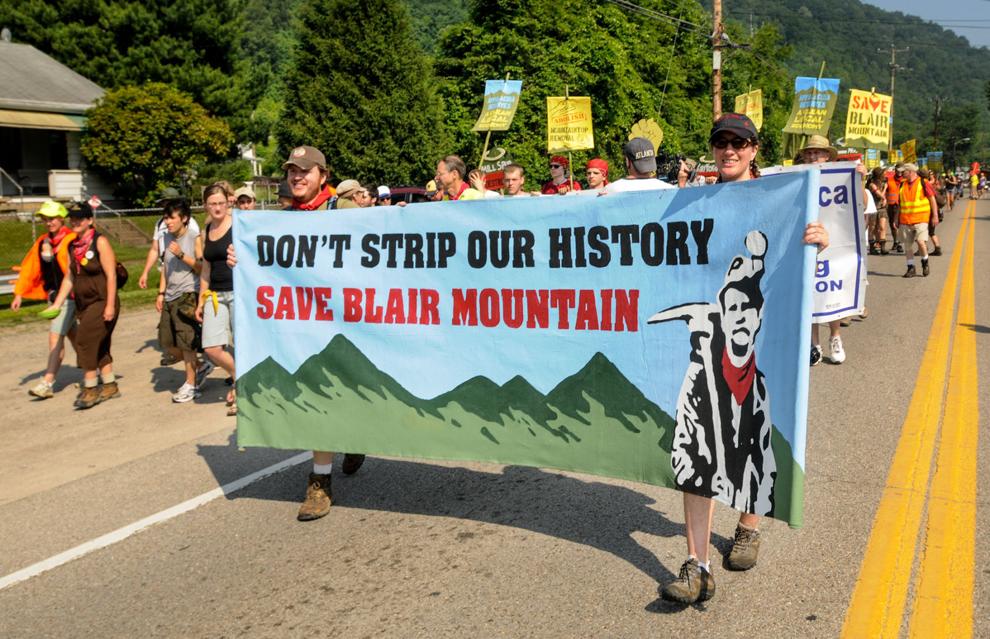
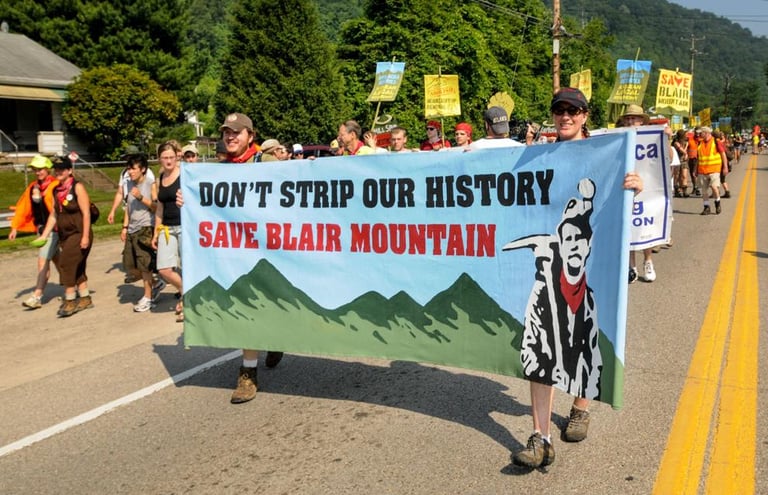
Save Blair Mountain Marchers in 2011. (Photo Credit: Chris Dorst, Gazette Mail)
Questions?
Want to talk in person?
Send us a call or email!
INFO: 720-639-1777
EMAIL: [email protected]
Sources:
https://www.bluegrasshall.org/inductees/hazel-dickens-and-alice-gerrard/hazel-dickens/#biography
https://folklife.si.edu/magazine/hazel-dickens-life-of-work
Appalshop. (2002). Hazel Dickens - It’s Hard to Tell the Singer From the Song. United States.
Dickens, H., & Malone, B. C. (2010). Working girl blues: The life and music of Hazel Dickens. University of Illinois Press.
Gerrard, A. (2025). Custom Made Woman: A Life in Traditional Music. University of North Carolina Press.